Choosing the right cue can make a noticeable difference to comfort, cue ball control, consistency, and long-term enjoyment of the game.
This guide explains the main differences between snooker cues, English pool cues, and American pool cues, including tip sizes, lengths, construction styles, and what to consider before buying.
What to Consider Before Buying a Cue
Before looking at brands, splices, or cosmetic details, start with the most important question:
What game are you mainly playing?
The correct cue for one discipline may be a poor fit for another.
- Snooker: usually played with smaller balls and cue tips around 9–10mm.
- English pool: typically uses 2-inch object balls and a 1 7/8-inch cue ball, with cue tips around 8–9.5mm.
- American pool: uses larger, heavier 2 1/4-inch balls and generally requires cue tips around 11.2–13mm.
Other important factors include cue length, balance, joint style, convenience of transport, and whether you prefer a one-piece, two-piece, or 3/4 jointed cue.
Buying a good-quality cue from the start is usually worthwhile, because a well-made cue can last for many years if looked after properly.
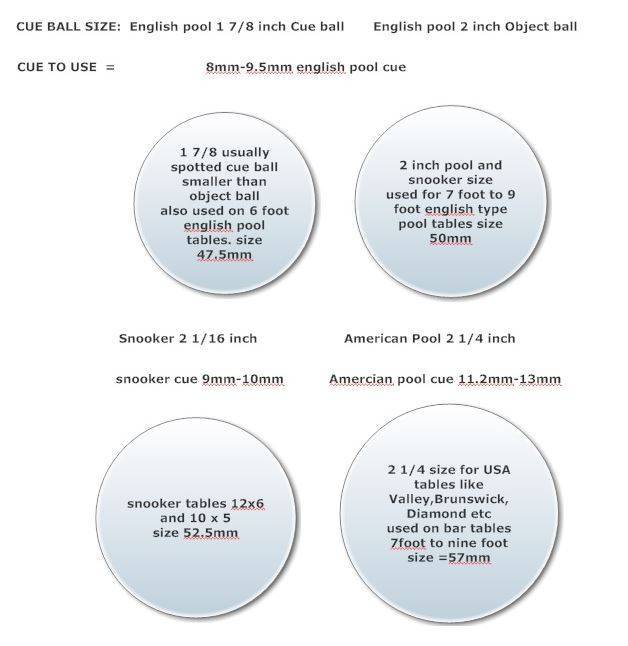
Cue ball sizes and typical cue selection by game type.
Snooker Cues
Most modern snooker cues are around 58 inches long and typically weigh between 16.5 and 20 ounces.
Tip sizes usually range from 9mm to 10mm, with many players preferring something around 9.5mm to 10mm.
Using a very small tip may sound attractive for precision, but going too small can reduce shaft strength and make the cue feel less forgiving.
Unless a player already knows exactly what they want, a mid-range snooker tip size is usually the safest choice.
A typical snooker cue has a slightly forward balance rather than being butt-heavy.
Many experienced players also prefer a 3/4 jointed cue, where the joint sits around 16 inches from the butt.
This format is popular because it combines a more traditional playing feel with easier transport.
For players looking at premium ready-made options, traditional brands such as Peradon are well known for their craftsmanship and consistency. It is also worth browsing the snooker cues category to compare different styles and specifications.
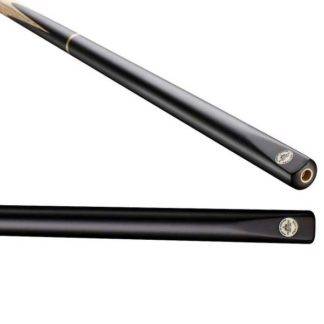
A good example of a traditional 3/4 jointed cue is the Peradon Joe Davis Three Quarter Cue, which combines classic construction with modern playability.
If you want something tailored exactly to your preferences, you can design your own custom snooker cue, selecting specifications such as weight, balance, and finish.
Typical Snooker Cue Specs
- Length: usually 58″
- Tip size: around 9–10mm
- Weight: often 16.5–20oz
- Popular format: 3/4 jointed cue
English Pool Cues
English pool cues are designed for use with 2-inch object balls and a 1 7/8-inch cue ball. They are common in Australia and the UK and are usually slimmer than American pool cues.
Tip sizes for English pool are commonly around 8mm to 8.5mm, although modified snooker cues can also be used in some cases, especially if fitted and finished correctly. Depending on preference, these cues may come in 3/4 jointed, 3-piece, or occasionally other transport-friendly formats.
A 3-piece pool cue usually includes an additional quick-release section in the butt, which can be useful in tight spaces or awkward table positions. For many players, this makes English pool cues very practical while still offering a familiar playing feel.
It is also a good idea to keep a separate break cue for English pool. This helps protect your main playing cue from unnecessary impact and wear during forceful breaks.
Who Are English Pool Cues Good For?
- Players focused mainly on English pool in Australia or the UK
- Players who prefer a slightly smaller tip
- Some snooker players looking for a slightly shorter or more manageable cue
American Pool Cues
American pool uses larger and heavier balls than snooker or English pool. Because of that, it is important to use a cue designed for the game. A snooker cue or English pool cue is generally not suitable for regular American pool and may feel underpowered or be placed under unnecessary strain.
Using a snooker or English pool cue for American pool is not just suboptimal — it can put unnecessary stress on the shaft and joints due to the heavier balls. Over time, this may lead to damage or reduced lifespan of the cue.
American pool cues typically use tip sizes around 11.2mm to 13mm. They also tend to feature a different taper and construction style. To players coming from snooker, they can sometimes feel more flexible or “whippy”, but that is part of how many American cues are designed to play.
Better American pool cues often include more technical construction features such as layered or matched shaft components, internal coring, and materials chosen for stability and consistency.
In practical terms, many players choose an American cue based on a mix of playing feel, balance, and design.
At the mid to upper end of the market, price differences are not always about dramatic performance gains alone. Once you reach a solid standard of build quality, the extra cost may reflect finish, construction complexity, branding, or visual details.
Brands such as McDermott are known for their technical construction and consistency, particularly in mid to high-end American pool cues.
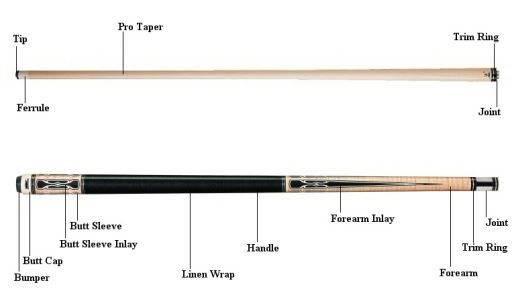
USA pool cue and descriptions of parts.
One-Piece, 2-Piece and 3/4 Cues
Cue format matters for both convenience and feel. There is no single “best” option for everyone, but each style has clear advantages.
One-Piece Cue
One-piece cues offer simplicity and continuity through the entire cue. Many players like their traditional feel, but they are less convenient to transport and store.
Two-Piece Cue
Two-piece cues are easy to transport and are common in American pool. A good two-piece cue can still play extremely well, especially when the joint and build quality are solid.
3/4 Cue
A 3/4 cue is very popular in snooker and English pool. The joint is positioned further back than on a normal two-piece cue, so more of the playing shaft remains uninterrupted. Many players like this compromise between portability and traditional feel.
| Type | Best For | Main Advantage | Main Trade-Off |
|---|---|---|---|
| One-piece | Home use, traditional feel | Simple, solid feel | Harder to transport |
| Two-piece | American pool, general portability | Easy to carry | Joint position may feel different |
| 3/4 cue | Snooker, English pool | Good balance of feel and convenience | Slightly more specialised format |
Understanding American Pool Cue Design
If you are new to American pool cues, these videos explain how construction, taper, and materials influence performance:
Cue Construction and Build Quality
Construction matters more than many beginners realise. Two cues can look similar online while feeling very different in actual play.
Hand-Spliced vs Machined-Spliced Cues
This comparison is most relevant for traditional snooker and English pool cues.
A machined-spliced cue is usually made by joining prepared sections in a more production-based process, while a hand-spliced cue involves more labour-intensive shaping and finishing.
Hand-spliced cues are often seen as more premium and are associated with traditional craftsmanship. They can also be very attractive visually. That said, not every player will notice a dramatic playing difference purely from the splice type alone.
In many cases, the final result still depends heavily on the quality of the timber, taper, tip, ferrule, and overall cue setup.
Ferrule, Tip and Taper
The ferrule and tip affect feedback, contact feel, and control. Taper influences how the cue moves through the hand and how flexible the shaft feels. These small design differences matter more over time than many new players expect.
If possible, focus on buying a cue that suits the game you play most often and has sound overall construction, rather than getting distracted by appearance alone.
Cue Extensions
Extensions are used mainly in snooker, but some pool cues also accept them. They are especially useful once a player improves and starts facing more difficult positional shots, long reaches, or situations where using a house cue would be less comfortable.
Common extension sizes include 6-inch, 12-inch, and 23-inch versions, with some adjustable models also available. Many serious snooker players find that owning both a short and long extension makes everyday play much easier.
How Much Should You Spend?
Budget matters, but very cheap cues often involve compromises in materials, consistency, and long-term reliability. That does not mean everyone needs an expensive cue, but it usually makes sense to buy the best cue you can reasonably afford for the game you actually play.
- Snooker / English pool: a good-quality cue can last for many years if chosen carefully and looked after properly.
- American pool: it is often worth avoiding the very cheapest options if you want dependable performance and better build quality.
Once you reach a solid mid-range standard, higher prices may reflect craftsmanship, construction detail, brand prestige, or visual finishing rather than a dramatic leap in performance.
As a rough guideline, many players find that spending at least $300 helps avoid the most common quality issues. In the $500–$1000 range, cues are often built to a much higher standard, with better materials and consistency.
Final Buying Advice
If you are unsure which cue to choose, use this simple checklist:
- Decide which game you play most: snooker, English pool, or American pool.
- Choose a suitable tip size for that game.
- Think about whether portability matters: one-piece, two-piece, or 3/4 cue.
- Set a realistic budget and prioritise quality over gimmicks.
- Consider whether you also need accessories such as a case, extension, or break cue.
You can browse our current ranges here:
Frequently Asked Questions
Can I use a snooker cue for pool?
It depends on the type of pool. A snooker cue can sometimes work for English pool, especially with the right tip size, but it is generally not recommended for American pool because the balls are larger and heavier.
What is the most common snooker cue tip size?
Many players prefer something around 9.5mm to 10mm, although personal preference still matters.
Are 3/4 cues better than two-piece cues?
Not automatically. A 3/4 cue is popular because it offers a more traditional playing feel while remaining portable. The best choice depends on the game you play and what feels right to you.
Do I need a separate break cue?
For many English pool and American pool players, yes. A separate break cue can protect your main playing cue from extra wear and impact.
Is a more expensive cue always better?
Not always. Higher prices may reflect craftsmanship, materials, or appearance, but once you reach a good standard of build quality, the gains can become more subtle.